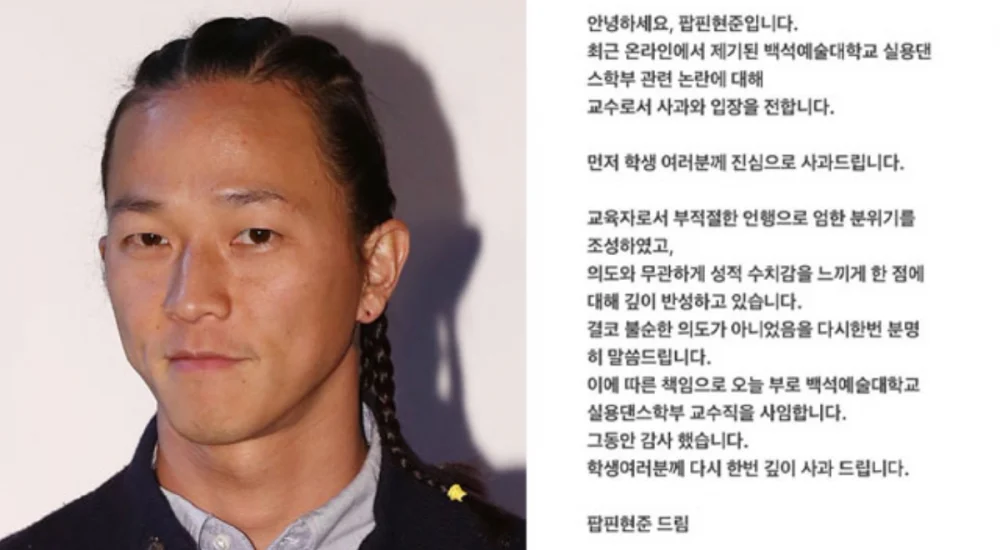
Poppin Hyun Joon Resigns from University Post Following Sexual Humiliation Admission
Poppin Hyun Joon resigns from his university position after admitting to causing “sexual humiliation,” prompting discussions on accountability and ethics in the entertainment and education sectors.
Poppin Hyun Joon Resigns from University Post Following Sexual Humiliation Admission
South Korean dancer, entertainer, and television personality Poppin Hyun Joon has officially resigned from his university post after admitting to causing “sexual humiliation” to an individual under his supervision. The resignation has sparked widespread discussion among fans, educators, and the public regarding accountability, professional ethics, and the boundaries of conduct within both the entertainment and academic fields.
Known for his dynamic dance performances and appearances on Korean television, Poppin Hyun Joon has built a significant reputation in the entertainment industry. However, recent revelations about his behavior while holding a university position have led to serious backlash and an ongoing debate about responsibility among high-profile figures.
Details of the Admission
In a public statement, Poppin Hyun Joon acknowledged that his actions led to sexual humiliation, though specific details regarding the incident were not fully disclosed. He expressed regret for his behavior and emphasized that he had resigned to take responsibility and avoid further harm to the university’s reputation.
Key points from his statement include:
Acknowledgment of wrongdoing: Hyun Joon admitted that his conduct caused emotional distress.
Resignation as a form of accountability: He stepped down from his university position immediately.
Commitment to reflection: The entertainer indicated that he would reflect on his actions and take steps to ensure such behavior is not repeated.
The university has confirmed his resignation and stated that it will cooperate with any further investigations into the matter.
Public and Media Reactions
News of Poppin Hyun Joon’s resignation has elicited strong reactions across social media, news outlets, and the academic community. Many have expressed disappointment, emphasizing the need for public figures and educators to maintain professional conduct.
Popular reactions include:
“It’s critical that those in positions of authority understand the responsibility they hold.”
“Admitting wrongdoing is a start, but real accountability requires more than a resignation.”
“The entertainment industry and academic institutions must reinforce strict standards of ethics.”
These responses underscore the public’s growing intolerance for misconduct, particularly by figures who serve as mentors or role models.
Impact on Career and Reputation
The controversy has significant implications for Poppin Hyun Joon’s career, both in entertainment and academia. Experts suggest that even though the incident occurred in a university setting, public perception can strongly influence professional opportunities, endorsements, and future collaborations.
Some possible consequences include:
Reduced appearances on television and variety shows
Loss of teaching or mentoring opportunities in academic or dance institutions
Increased scrutiny from media and the public
While resigning demonstrates a level of accountability, it does not entirely mitigate the potential long-term impact on his reputation.
Ethical and Legal Considerations
The resignation raises important questions about ethical and legal responsibility:
Ethical responsibility: As a public figure and educator, Poppin Hyun Joon was expected to maintain professional boundaries and ensure the dignity of those under his supervision.
Legal implications: Depending on the severity of the incident, there could be potential for legal action related to harassment, workplace misconduct, or emotional distress.
Institutional accountability: Universities must ensure safe and professional environments, highlighting the importance of protocols for reporting and investigating misconduct.
This case exemplifies how entertainment professionals holding academic positions must balance influence with ethical conduct.
The university where Poppin Hyun Joon served has released a statement affirming that it takes such allegations seriously and is committed to maintaining a safe environment for students and staff. Key measures include:
Reviewing policies on faculty conduct and student safety
Offering support for any individuals affected by the incident
Ensuring transparency in the investigation process
The institution emphasized that resignation does not absolve the university from its duty to address potential issues and safeguard the campus community.
Comparison with Industry Norms
In both academia and entertainment, misconduct allegations often lead to immediate scrutiny and calls for accountability. High-profile figures, particularly those in mentoring or supervisory roles, are expected to set a standard for ethical behavior.
Poppin Hyun Joon’s resignation aligns with current trends in Korea and globally, where public figures step down to take responsibility, though many critics argue that resignation alone may not be sufficient to restore trust.
Role of Social Media in Accountability
Social media has played a crucial role in spreading awareness of the incident. Discussions, opinions, and criticisms have circulated widely, reflecting the public’s increasing demand for transparency.
Platforms such as Twitter, Instagram, and fan communities have highlighted issues including:
The importance of protecting students and staff in educational institutions
Holding entertainers accountable for actions beyond the stage
Encouraging institutions to strengthen reporting mechanisms
Social media scrutiny demonstrates that in the digital age, professional missteps by public figures are subject to immediate and sustained public attention.
Lessons and Takeaways
The Poppin Hyun Joon case offers several important lessons for educators, entertainers, and institutions:
Boundaries in professional relationships: Individuals in authority must respect personal and professional boundaries.
Transparency and accountability: Prompt admission and corrective action are essential in mitigating harm.
Institutional responsibility: Universities and organizations must provide clear reporting channels and enforce strict codes of conduct.
Public awareness: Social media amplifies public demand for ethical behavior, requiring celebrities and educators to maintain integrity.
These takeaways are relevant for all professionals who interact with students, fans, or subordinate staff.
Potential Outcomes and Future Steps
The resignation opens several possibilities for next steps:
Further investigation by the university to ensure all concerns are addressed
Implementation of stricter guidelines for faculty and staff behavior
Monitoring of public and media response to guide reputation management
Potential involvement of legal authorities if evidence of harassment or misconduct emerges
Regardless of the outcome, the incident serves as a reminder of the importance of ethical behavior in positions of authority.
Broader Implications for the Entertainment and Academic Fields
The controversy highlights challenges faced by entertainers who also serve as educators:
Maintaining professional conduct across multiple roles
Navigating the intersection of public scrutiny and private institutional responsibilities
Reinforcing the importance of ethical training and awareness for individuals in influential positions
Experts note that this case could set a precedent for how institutions and entertainment companies handle similar situations in the future.
Conclusion
The resignation of Poppin Hyun Joon from his university post following an admission of causing sexual humiliation underscores the critical importance of accountability and ethical conduct in both education and entertainment. While the resignation represents an initial step in taking responsibility, the public and institutions alike continue to demand transparency, fairness, and corrective measures.
This incident serves as a cautionary tale for public figures, emphasizing that influence and authority come with heightened expectations of ethical behavior. As investigations continue and public discourse evolves, the case will likely shape future standards for professional conduct, institutional responsibility, and accountability in Korea’s entertainment and academic sectors.